
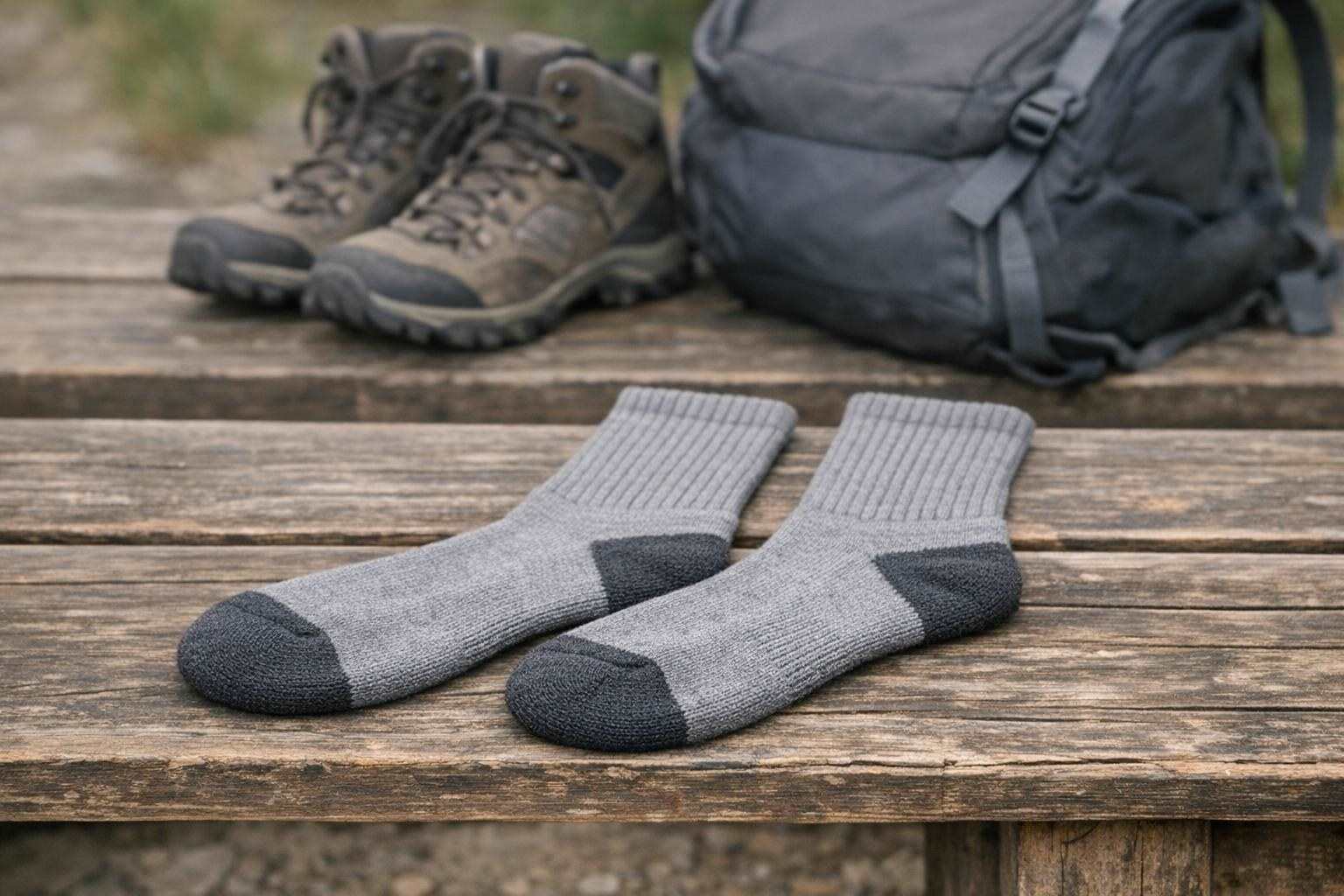
The extra weight of a loaded training pack alters the way your feet operate and therefore it is important to select a pair of walking socks that allow you to recognize early on any hot spots that may develop into blisters. In practical terms, this means selecting socks on the basis of fit, fiber type, cushioning, drying properties and, above all, a willingness to stop if your feet are giving you any problems along the way.
Start with fit, not thickness
Most socks are too thick and so need to be tried on with your footwear and insoles before being worn. This will highlight whether a sock is too tight across the toes or creates an upwards pressure on the heel. Better to wear a thin, comfortable sock than a thick one that could cause more problems.
Start with checking the toe area for sufficient room for your toes to spread out. The toe seam should not create wrinkles in the fabric. Also check the heel pocket to ensure it does not slip off the heel. Check how the cuff sits on your calf and avoid too tight a cuff as this can also create pressure points.
Similarly for long 'flog' sessions such as for a Reconnaissance Patrol, for a Forced March or for prolonged and arduous training exercises which incorporate climbing (uphill), such as a 'warm up' before a longer event – test the loaded pack through a variety of movement, and in the same boots/shoes with insoles, that you shall be wearing before deciding upon the very best sock to wear on the event itself.
Choose fibres for the conditions
A walking sock is generally made of a combination of natural fibers and synthetic fibers. There are many different types of wool and synthetic fibers used in making walking socks and each will offer up a different combination of qualities. Importantly, the fibers within a sock will provide a different set of characteristics to the outer fabric and the entire garment as a whole. For this reason, it is generally the label on a walking sock that provides the least amount of information about it.
While moisture-wicking socks will help to wick sweat from your skin, it does not mean that your feet will stay dry all the time. The waterproof boot you have will only keep your feet dry in wet conditions. In very warm weather or very hard long sessions where your boots do not ventilate well then your socks will likely get wet too. Use this information about your footwear system to assess whether or not your current socks are performing adequately.
For very hot conditions the sock must be a tight fit and of thin weight. For cold conditions allow for the extra thickness of the sock but don't compress the toes. Two layers of socks may seem a good solution to provide extra insulation but they will rub on each other inside the boot and make it too tight. Always try out the combination of socks and footwear before going out on a long hike.
Match cushioning to pressure points
Cushioning is needed for areas such as the heel and forefoot that take repeated impacts. In such cases extra padding can be beneficial but it must not add so much bulk that it restricts the shoe or causes excess heat. Different areas need different amounts of cushioning depending on things like the type of footwear being worn, the walking surface, the pace at which the person is walking and the amount of weight they are carrying.
Pressure points will show up on your feet in a number of ways including burning under the ball of your foot and soreness or tenderness to the back of your heel. Most commonly though you will get a burning or tingling sensation in your toes or feel that they are cold even when the rest of your foot is warm. Remove your footwear and check your feet out as soon as you experience any of these symptoms.
Even the smallest amount of irritation and redness that fades within 20 minutes or so is worth remembering. Also, a hardened, shiny, broken, or sore area is obviously best avoided altogether. All such problems can develop within a short space of time into major problems that could well put the rest of your trip in jeopardy. Don't wait for a blister to appear, address the problem as soon as you notice any signs of pressure.
Build a simple blister-prevention routine
Be careful with socks too: Clean, dry and no sharp folds are essential for good walking socks. Also, check your toenails for rough edges and take care of any hot spots previously experienced. It's also important to test out any new insoles, boots or foot care products before donning them for long, arduous treks.
Check your feet at rest as well as during activity for signs of increasing discomfort or pressure. Check toes, heels, and balls of feet for signs of soreness, blisters or even bruising. A sore foot can become a very painful one in no time at all, and that could spell disaster on a long trek.
Consider bringing a change of socks in a sealed plastic bag. This will prevent them from becoming damp in wet weather. Blister dressings need to be applied to clean and dry skin. Look for current medical advice on the best way to treat recurring or chronic problems with your feet.
Wash, dry and inspect after use
For a comfortable sock change post-walk ensure you turn the item inside out where specified to wash them, remove any dirt and then wash according to the manufacturer's instructions for washing and drying. When drying socks ensure they are completely dry before storing. Avoid storage near heat such as boiler gutters, boiler floors or from under radiators.
Inspecting areas of the sock that have been subjected to the most stress (heeling, ball of foot etc) for signs of wear such as thin patches, stretched cuffs, worn elastic, rough seams etc. Smell does not always mean that a sock needs washing. A clean smelling sock does not necessarily mean that it is of good enough quality to wear but a smelly sock does not necessarily mean that it is of poor quality either.
In considering sock wear for long distance walking it would appear to be sensible to wash pairs together and rotate them to ensure that you are using the cleanest pair possible. Socks can be washed and then worn; but it must be allowed time to dry out completely. In the end, though, socks wear out. They can be mended, but at some point there will come a point where wearing them will cause irritation due to rough ridges, holes and so on. Such wear is indicative of a point where it would be better to retire them to the repository of past footwear. Be aware that problems with your feet on long walking occasions could be due to many factors, including the way you walk, the boots and insoles you wear and even medical problems – and socks are not a cure for such problems.
A great pair of walking socks will form part of a complete outfit that forms well with your footwear and insole(s). Give them a test run and pay attention to any blisters, discomfort or other signs of pressure on your feet as you walk. Record any change in blisters and soreness as your pack weight or walking conditions change. Good preparation is not about finding the perfect fabric, it's about realizing the problems that small changes will bring.